


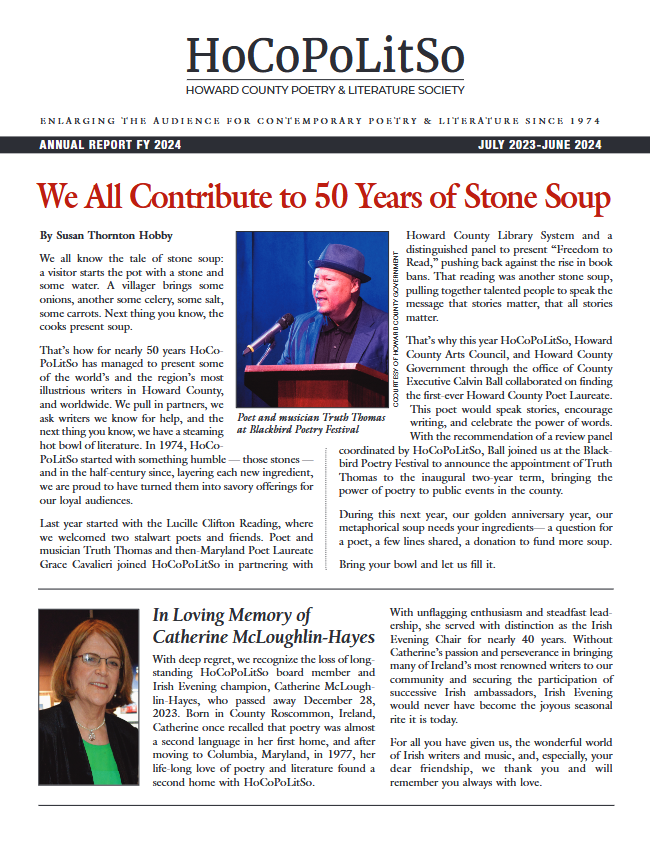
Read Our Annual Report
Wilde Readers of October: Caroline Bock & Dr. Nishi Chawla
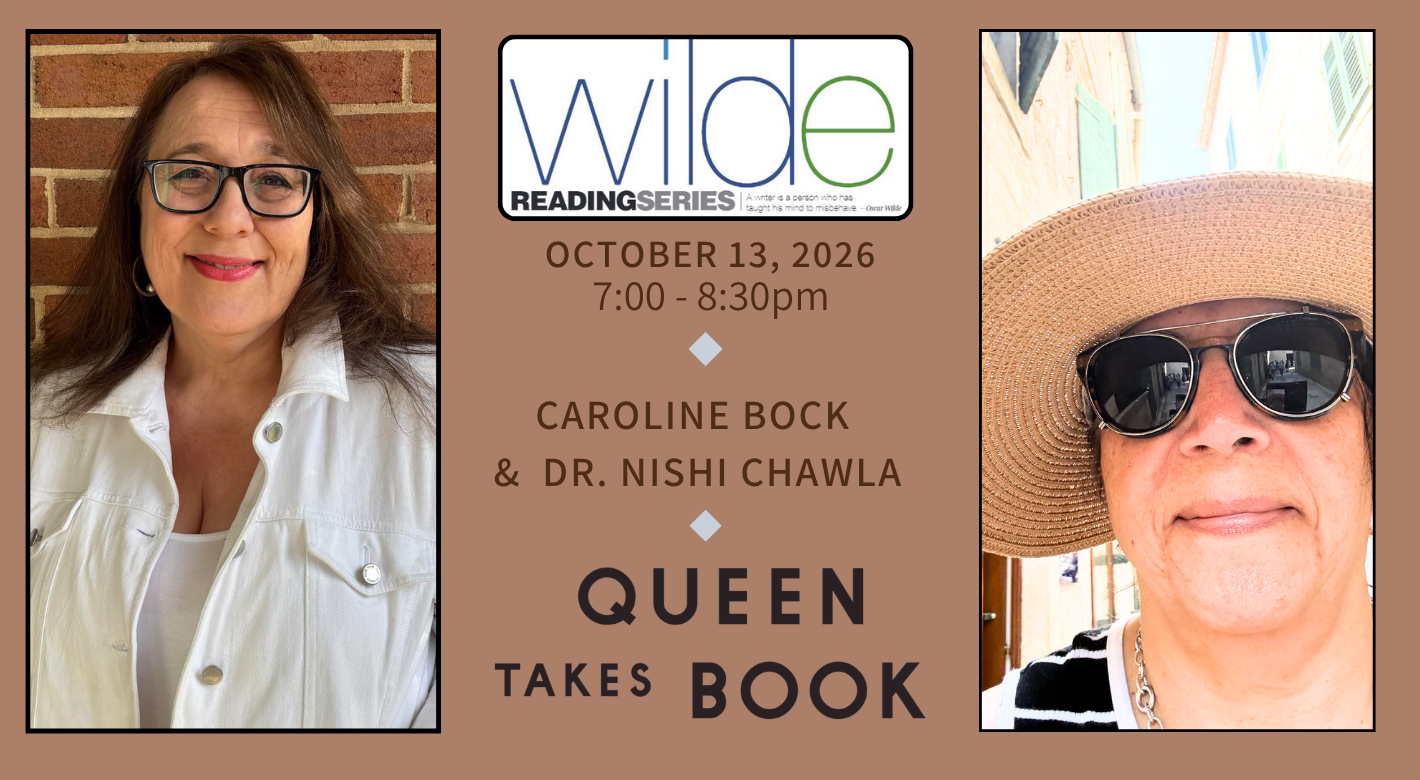
HoCoPoLitSo welcomes all to the October meeting of its Wilde Reading Series, proudly continuing its ongoing eleventh season of highlighting local authors in Howard County. This month’s reading features Caroline Bock and Dr. Nishi Chawla, hosted by Laura Shovan and Ricky Jones. Please join us at independent bookstore Queen Takes Book on Tuesday, October 13th at 7 p.m., at 6955 Oakland Mills Rd, Suite E, Columbia MD, 21045.
Our warm and welcoming open mic follows the featured authors and we hope you will let us hear from your stories, poems, or other piece. Please prepare no more than five minutes of performance time (about two poems) and sign up when you arrive. Books by the featured authors will be available for purchase.
In addition to our customary author’s Q&A below, we would like to invite you to read and subscribe to a new, monthly Wilde Readings Newsletter distributed on HoCoPoLitSo’s Substack and penned by Ricky Jones, who joined the team of series hosts this season after many prior months gifting us with insightful questions as an audience member. Each month, Ricky will share his thoughts on the upcoming authors, and how the topics and themes of their work resonated. This month: on procrastination, freedom of choice, and how to know the difference between obligation and responsibility.
Below, get to know Caroline and Nishi!
Who is the person in your life (past or present) that shows up most often in your writing?
Caroline: Pop. My father. He is a quirky ghost trailing my main character, television executive Amy Greene, in my new novel The Other Beautiful People. He is always here with me; may he rest in peace, may his memory be a blessing, and may he please let me write a story that doesn’t include him.
Nishi: The person who shows up most often in my writing is, perhaps surprisingly, myself—not as an autobiographical character, but as a presence. My experiences, questions, contradictions, loves, losses, migrations, and encounters with different cultures inevitably find their way into my work. Even when I write about people very different from me, some part of my own emotional and intellectual journey is there.
I think that is what happens when one writes across genres. The self keeps returning, sometimes disguised as a character, sometimes as a voice, sometimes as a question. I may be writing about Ayodhya, refugees, Indigenous communities, Gandhi and Tagore, or a family caught between cultures, but underneath those stories is the same person asking: How do we live with difference, memory, displacement, love, and the need to belong?
So perhaps the person who appears most often in my writing is not a particular person at all. It is the evolving self I have carried through all the places and lives I have encountered.
Where is your favorite place to write?
Caroline: My desk, which overlooks a public park, and two magnificent fir trees, and often there— a murder of crows watching for the next paragraph to be written.
Nishi: My favorite place to write is wherever I can be alone with my thoughts. I have written in my study, in hotel rooms, on airplanes, and even in cafés. But I especially love writing near a window— with the world moving outside while I remain completely absorbed in the world I am creating.
I don’t need silence as much as I need a sense of solitude. For me, the real writing space is an inner one: that moment when everything around me recedes and a character, a voice, or a sentence begins to take over.
Do you have any consistent pre-writing rituals?
Caroline: I select music to write with, an old-school CD. My current favorite is Anat Cohen, a jazz clarinetist.
Nishi: I don’t really have a rigid pre-writing ritual. What I need most is a certain inward quiet— a feeling that I can enter the world of the work without distraction. I often read over a few pages of what I have already written, let the language and characters come back to me, and then begin. Sometimes a cup of tea, music, or simply sitting quietly helps. The real ritual, however, is returning to the page every day and allowing the writing to take over.
Who always gets a first read?
Caroline: My husband, because he is not a writer (he’s a labor lawyer), and he will be both very kind and very honest.
Nishi: Usually, no one gets a first read while the work is still taking shape. I like to live with the writing myself first— to discover what it is trying to become before I expose it to another reader. Once I feel it has found its form, I have a very small circle of trusted readers whose responses I value, particularly when they can tell me where the work is alive and where it is not yet working.
What is a book you’ve read more than twice (and would read again)?
Caroline: Diane Seuss’s collection of American sonnets, frank: sonnets.
Nishi: There are books I have returned to more than once, but one that stays with me is The Magic Mountain by Thomas Mann. I found something different in it each time— the first reading drew me into its strange, suspended world, while the second made me more aware of its ideas about time, illness, society, and the human condition. I think some books ask to be reread because we are never quite the same reader twice.
What is the most memorable reading you have attended?
Caroline: At Syracuse University, I studied with the poet Jack Gilbert. I will never forget his mane of white hair against the snowy sky. He read his poetry and made me cry. He made everyone in the room cry. He wiped away tears. Snow fell. You can imagine snowflakes in the room, in our hair. It was a joy.
Nishi: One of the most memorable readings I attended was one where the boundary between the writer and the audience seemed to disappear. I remember the sense of intimacy— the room becoming completely still as the writer read, and everyone listening not simply to the words but to the life and experience behind them. Those are the readings I remember: not necessarily the grandest ones, but the ones where language creates a shared space between strangers.
• Caroline Bock is the author of The Other Beautiful People, a workplace love story, inspired by her two-decade career in cable television, notably at AMC, Bravo, and IFC. She is also the author of the young adult novels Lie and Before My Eyes, as well as the short story collection Carry Her Home. She is the co-president and prose editor at the Washington Writers’ Publishing House based in Washington, DC. The Other Beautiful People (Regal House Publishing, 2026) is her first novel for adults.
Caroline’s home page is www.carolinebockofficialauthor.site and she can be found on Facebook and Instagram as @CarolineBockAuthor.
• Dr. Nishi Chawla is an academic, a writer and a filmmaker. She has published eleven plays, three novels, and eight collections of poetry and written and directed four award-winning art house feature films. She co-edited two global anthologies of poetry Greening the Earth and Singing in the Dark. Dr. Chawla has taught English Literature for forty years at the University level. She is one of the few Indian playwrights to have two plays in Manhattan, NY and has appeared on the U.S. Library of Congress program “The Poet and the Poem.”
Find more at www.nishichawla.com.

Lucille Clifton Reading 2026 at Patapsco Literary Festival
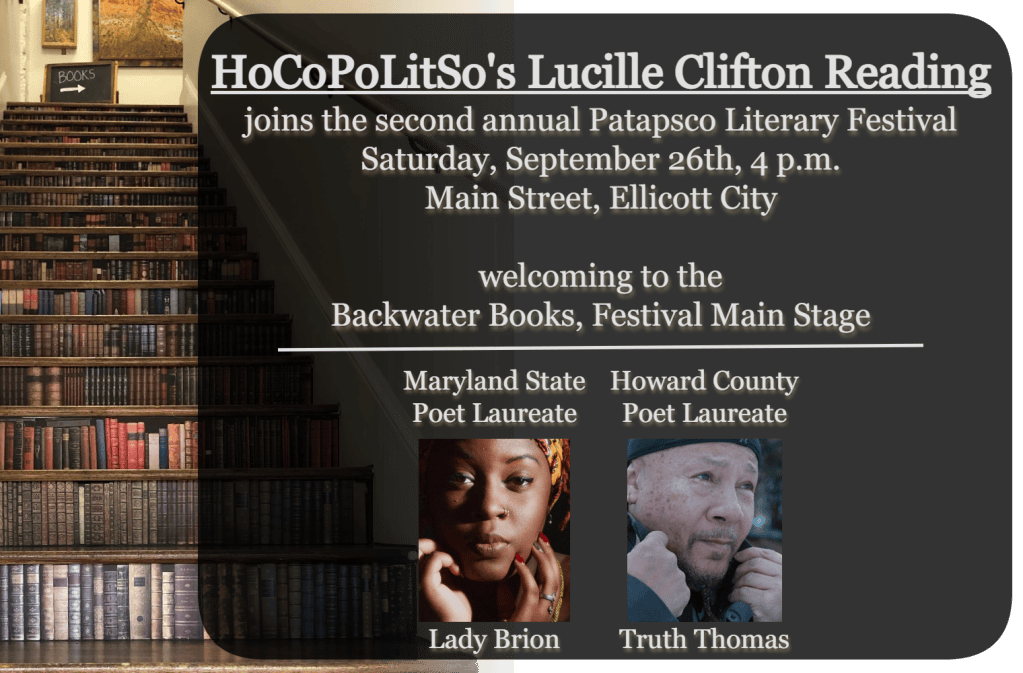
In fall of 1974, Lucille Clifton joined Carolyn Kizer to headline HoCoPoLitSo’s first-ever event, reading from their work and discussing their lives as writers to adult and student audiences in Wilde Lake. Lucille would go on to serve as Poet Laureate of Maryland, 1978–1985, and as artistic advisor to HoCoPoLitSo. Since her passing in 2010, HoCoPoLitSo has honored its dearly departed friend at the annual Lucille Clifton Reading, each year highlighting poets, topics, and partners we feel Lucille would have been proud to champion.
We cordially invite you to join us for our 2026 Lucille Clifton Reading, presented in partnership with Backwater Books at the second annual Patapsco Literary Festival, an all-day celebration of literature to be held Saturday, September 26th in and around Main Street, Ellicott City. The fun begins at 10 a.m. and concludes with live music at 8 p.m., and in between features dozens of author talks, panel discussions, and featured readings. We hope you will visit us at our booth upstairs at Sweet Elizabeth Jane during the festival to meet and make friends and receive free prizes— and, at 4 p.m. on the main stage inside Backwater Books, to hear a reading from Maryland State Poet Laureate Lady Brion and Howard County Poet Laureate Truth Thomas.
📅 Saturday, September 26
🕜 Poets Laureate Reading— 4:00 p.m. (Festival runs 10 a.m.–5 p.m.)
📍 Backwater Books & Bibliopub
8156 Main Street, Ellicott City, MD
Attendance is FREE and open to the public! As we expect hundreds to come, immediate parking on Main Street will likely be difficult, and we recommend the use of the Old Ellicott City Trolley, which provides free circulation service from Parking Lot F located off Ellicott Mills Drive to Parking Lot A off Oella Avenue across the Patapsco River. For questions or issues regarding the broader Festival, please contact Backwater Books at info@backwaterbooks.com or by phone call to (410) 696-2482.
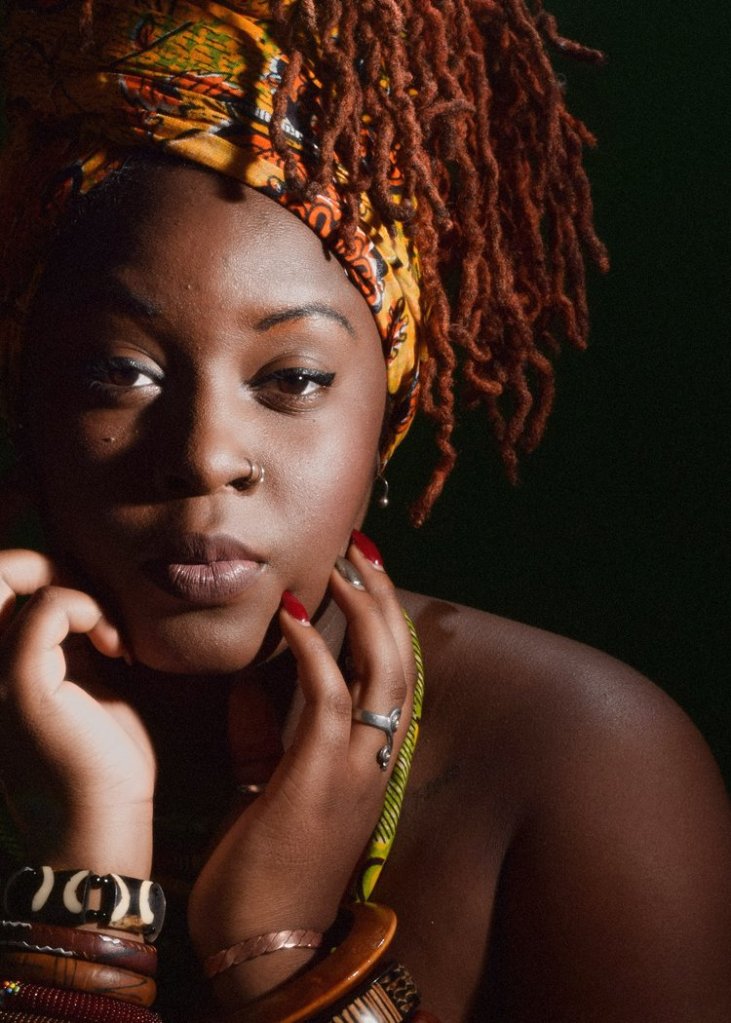
Lady Brion
Lady Brion is an international spoken word artist, activist, organizer and educator. Lady Brion currently serves as the Executive Director of the Black Arts District. In 2024 she was appointed by Governor Wes Moore as the Poet Laureate of Maryland, making her the youngest Poet Laureate in Maryland’s history and the only spoken word artist to ever hold this position. She received her B.A. in Communication and Culture from Howard University and her MFA in Creative Writing & Publishing Design from the University of Baltimore.
During her slam career she has won the 2016 and 2021 National Poetry Slams, the 2017 and 2019 Southern Fried Regional Slams, and the 2019 Rustbelt Regional Slam. In 2021 she became the Women of the World Poetry Slam Champion making her the number 1 ranked woman slam poet in the world.
Truth Thomas is a singer-songwriter, poet, and photographer born in Knoxville, Tennessee, and raised in Washington, DC. He previously recorded as Glenn Edward Thomas for Capitol Records. He is the founder of Cherry Castle Publishing and studied creative writing at Howard University under Dr. Tony Medina. Thomas earned his MFA in poetry from New England College. His poetry collections include Party of Black, A Day of Presence, Bottle of Life, and Speak Water, which won the 2013 NAACP Image Award for Outstanding Literary Work – Poetry. He is also the author of the children’s book My TV Is Not the Boss of Me, illustrated by Cory Thomas.
A 2025 Outstanding Artist Howie Award recipient, Thomas has served as Bauder Writer-in-Residence for Howard County Poetry and Literature Society (HoCoPoLitSo) and is the Inaugural Poet Laureate of Howard County, Maryland. His poems have appeared in more than 150 publications, including The 100 Best African American Poems (ed. Nikki Giovanni) and This Is the Honey (ed. Kwame Alexander). Thomas is the creator of the Skinny poetry form and serves as Editor-in-Chief of The Skinny Poetry Journal.
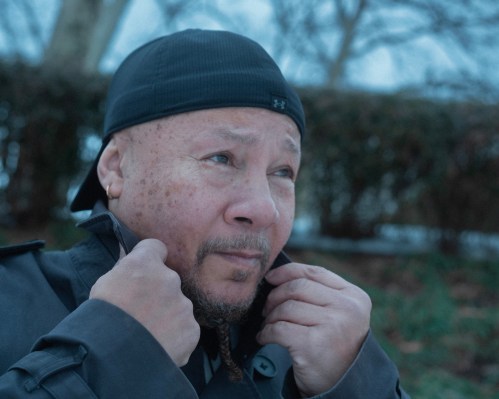
Truth Thomas
HoCoPoLitSo is a 501(c)(3) nonprofit organization (FEIN 52-1146948) registered in the state of Maryland, donations to which are tax-deductible to the fullest extent allowed by law. A copy of our current financial statement is available upon request. Documents and information submitted to the State of Maryland under the Maryland Charitable Solicitations Act are available from the Office of the Secretary of State for the cost of fees and postage.
HoCoPoLitSo is supported in part by funds gratefully received from the Maryland State and Howard County Arts Councils; Howard County Government; Community Foundation of Howard County; Dr. Lillian Bauder; and from numerous other, generous individual and corporate contributors. Event proceeds support the live and recorded literary programs offered by HoCoPoLitSo for student and general audiences. The artistic contents and opinions expressed at HoCoPoLitSo events do not necessarily reflect the views or policies of HoCoPoLitSo’s grantors, donors, or individual Board or staff members.
The Howard County Poet Laureate and Youth Poet Laureate Programs are a partnership of HoCoPoLitSo, Howard County Arts Council, and the Office of the Howard County Executive.
The 2026 Bauder Lecture, featuring Mat Johnson & Steven Leyva
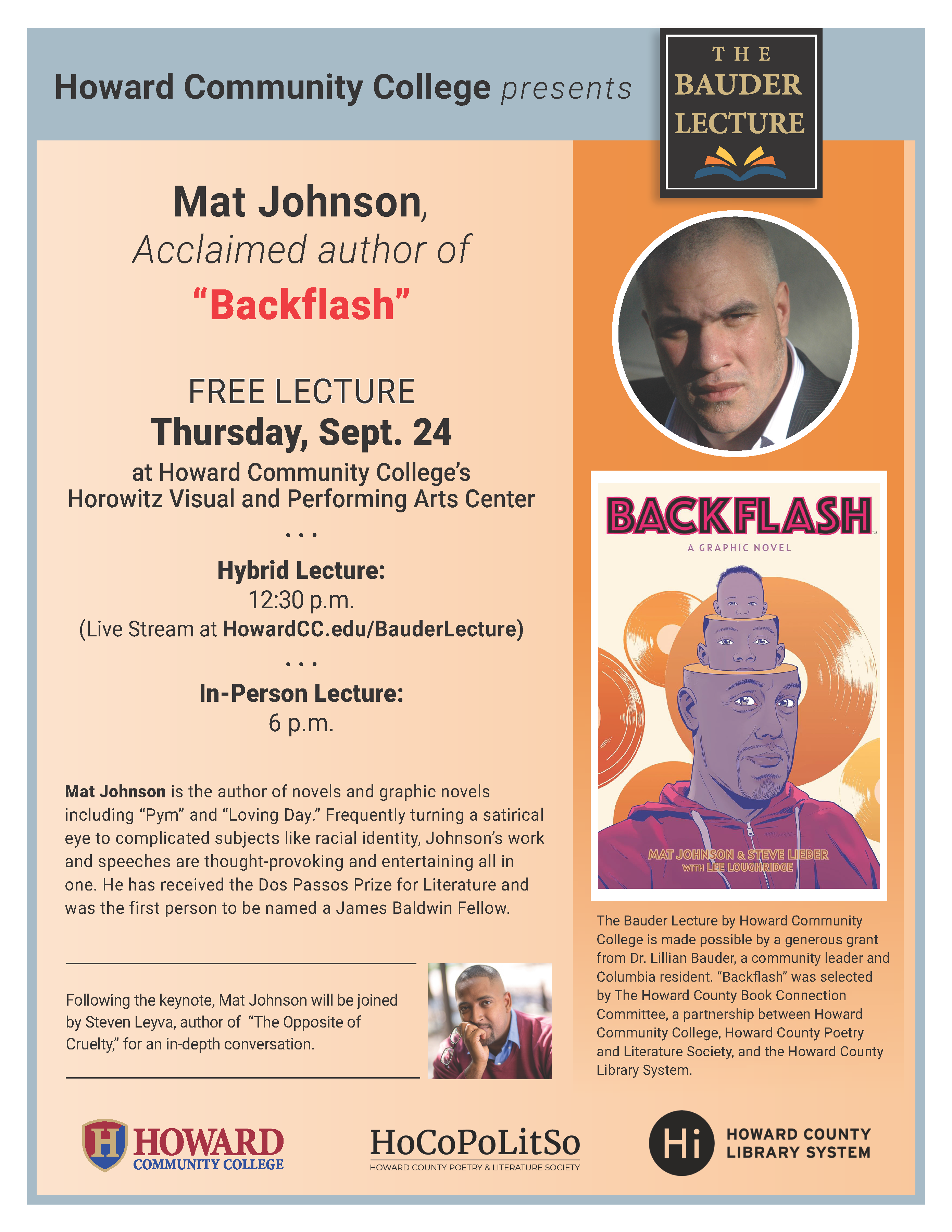
Thursday, September 24th, 2026, HoCoPoLitSo once more proudly partners with Howard Community College and Howard County Library System to present the sixth annual installment in the Bauder Lecture Series, which this year features a keynote from Mat Johnson, acclaimed author of Backflash, followed by an in-depth conversation hosted by Steven Leyva, poet, professor, and author of The Opposite of Cruelty.
We invite all to join us for this free and public event, in person at the Horowitz Visual and Performing Arts Center on the college campus, or online streamed live via Vimeo at this link. The event is held in two segments: a keynote, reading, and stage conversation at 12:30 p.m., followed by a brief reception; and a reprise at 6:00 p.m. HoCoPoLitSo shall offer books from both authors for purchase and signing to in-person attendees.
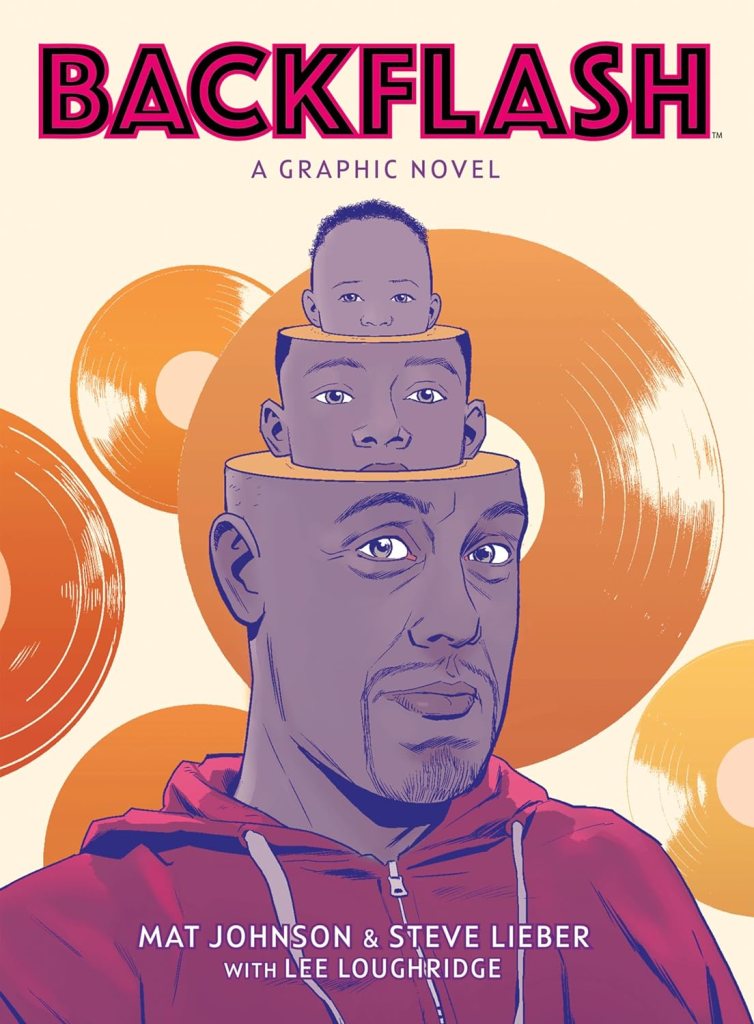
Overwhelmed with grief over the death of his mother, shamed by his failures in marriage and fatherhood, and burdened by massive debt, Devin’s life is spiraling out of control. That is, until he discovers the impossible: nostalgia is his superpower. With a random touch of family memorabilia, he can mentally travel back in time, reliving the best moments of his past while finding relief from the present. With his mother gone, Devin can now investigate her greatest secret: the identity of the father he never knew. But the more Devin “backflashes” into time, the faster his present life falls apart. On this hunt for a truth that was never supposed to come to light, Devin must come to terms with his past if he wants any chance at a future. Backflash is a riveting literary graphic novel thriller laced with sly humor and raw emotion that explores time travel in wild and unpredictable ways.
Mat Johnson is an award-winning novelist, graphic novelist, and professor whose work explores race, identity, and American history through satire, historical fiction, and humor. The son of a Black mother and an Irish-American father, Johnson draws on his own experiences to offer thought-provoking perspectives on what it means to be a person of color in America. His acclaimed novels include Hunting in Harlem, Pym, and Loving Day, the latter of which was named a New York Times Notable Book and is widely used in common reading programs at colleges and universities. Johnson is also the author of the graphic novel Incognegro, which examines racial passing and American’s history of lynching through a noir mystery. His honors include the Dos Passos Prize for Literature and recognition as the first James Baldwin Fellow. Johnson is a professor in the Creative Writing Program and English Department at the University of Oregon.
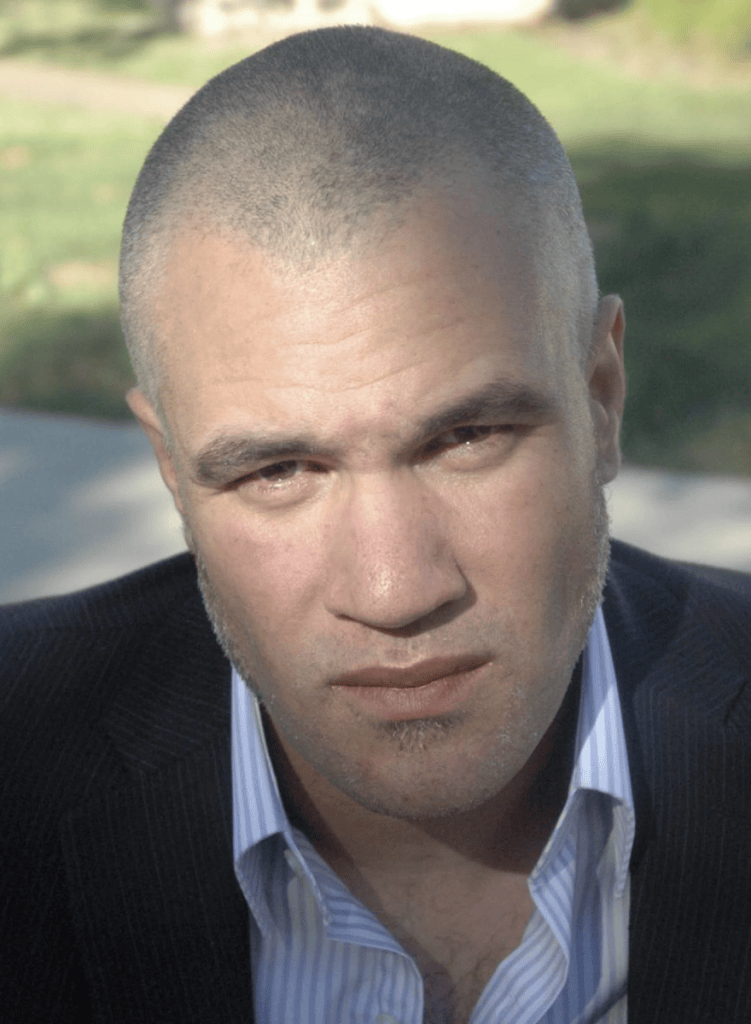
Photo credit: Meera Bowman Johnson
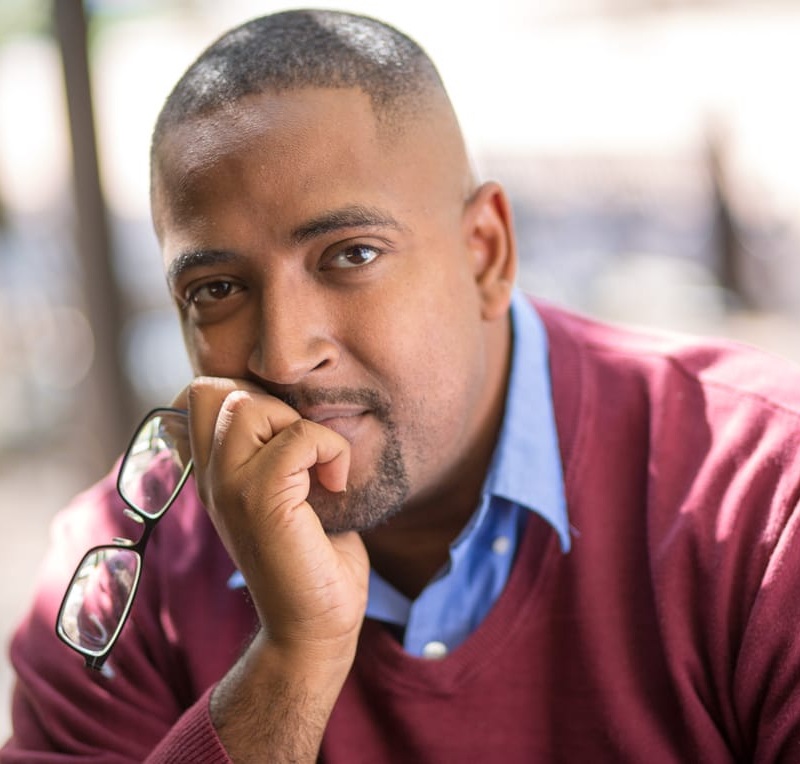
Photo credit: Chris Hartlove
Steven Leyva was born in New Orleans, Louisiana and raised in Houston, Texas. His poems have appeared or are forthcoming in 2 Bridges Review, Scalawag, Nashville Review, jubilat, Vinyl, Prairie Schooner, and Best American Poetry 2020. He is a Cave Canem fellow and author of the chapbook Low Parish and author of The Understudy’s Handbook which won the Jean Feldman Poetry Prize from Washington Writers Publishing House. His second book of poems, The Opposite of Cruelty, was released by Blair Publishing in 2025. Steven holds an MFA from the University of Baltimore, where he is an associate professor in the Klein Family School of Communications Design.
The Bauder Lecture Series is made possible by the generous support of Dr. Lillian Bauder, a community leader and Columbia resident. Each year, the Howard County Book Connection— a partnership of HoCoPoLitSo and representatives from most departments of Howard Community College— selects one book, whose author is invited to headline the lecture; HoCoPoLitSo provides for a local author to join as a special guest, moderating an on-stage writer-to-writer conversation and audience Q&A. In addition, up to two students are honored with the presentation of the Don Bauder Awards, for their response to the chosen book in an essay or other creative format. The awards honor the memory of Don Bauder, late husband of Dr. Lillian Bauder, and a champion of civil rights and social justice causes.
For more information, or to view last year’s lecture, please visit Howard Community College’s Bauder Lecture Series event listing, or the home page of the Howard County Book Connection.
HoCoPoLitSo is a 501(c)(3) nonprofit organization (FEIN 52-1146948) registered in the state of Maryland, donations to which are tax-deductible to the fullest extent allowed by law. A copy of our current financial statement is available upon request. Documents and information submitted to the State of Maryland under the Maryland Charitable Solicitations Act are available from the Office of the Secretary of State for the cost of fees and postage.
HoCoPoLitSo is supported in part by funds gratefully received from the Maryland State and Howard County Arts Councils; Howard County Government; Community Foundation of Howard County; Dr. Lillian Bauder; and from numerous other, generous individual and corporate contributors. Event proceeds support the live and recorded literary programs offered by HoCoPoLitSo for student and general audiences. The artistic contents and opinions expressed at HoCoPoLitSo events do not necessarily reflect the views or policies of HoCoPoLitSo’s grantors, donors, or individual Board or staff members.
The Bauder Lecture Series and Blackbird Poetry Festival are partnerships of HoCoPoLitSo and Howard Community College. The Howard County Poet Laureate and Youth Poet Laureate Programs are a partnership of HoCoPoLitSo, Howard County Arts Council, and the Office of the Howard County Executive.
Wilde Readers of September: Serena Agusto-Cox & Henry E. Crawford
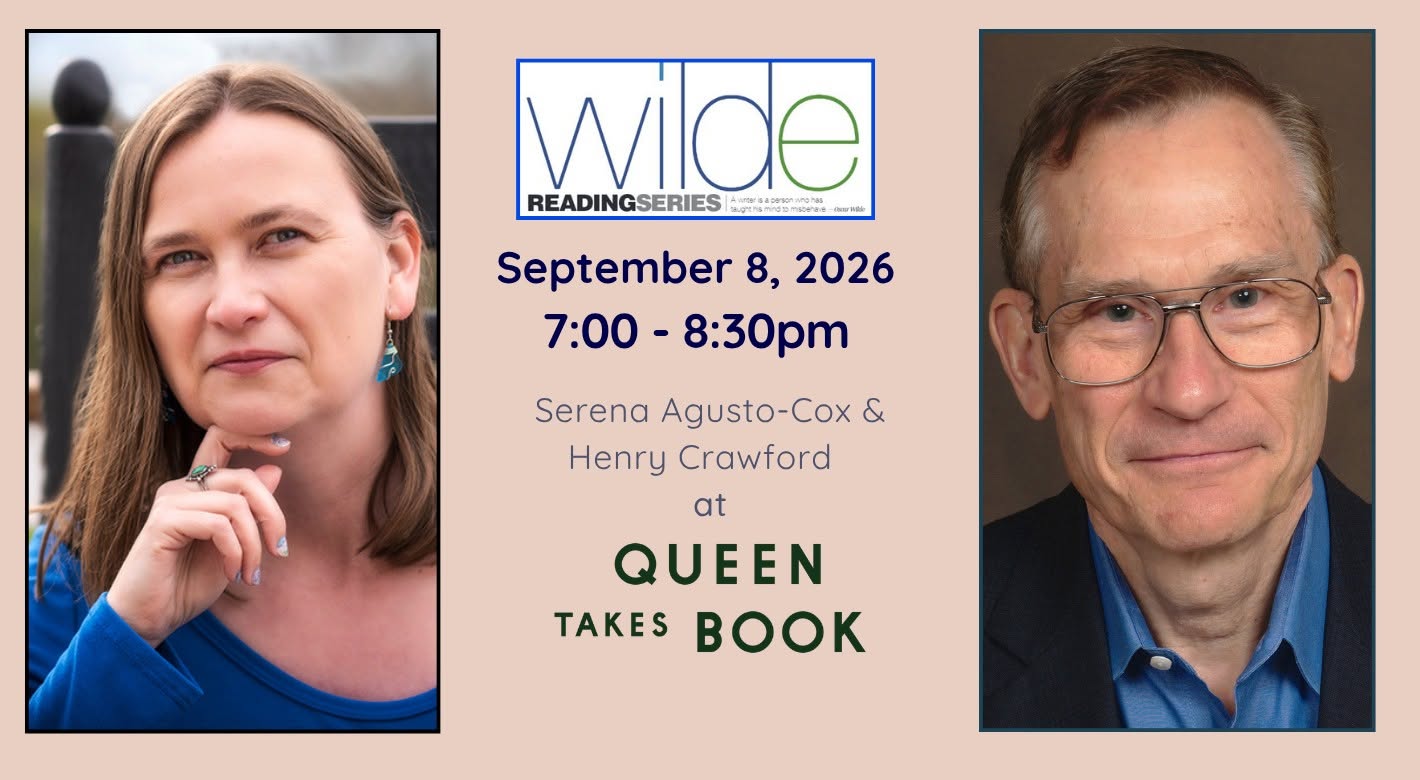
HoCoPoLitSo welcomes all to the September meeting of its Wilde Reading Series, the start of our eleventh season of highlighting local authors in Howard County. This month’s reading features Serena Agusto-Cox and Henry Crawford, hosted by Laura Shovan and Ricky Jones. Please join us at independent bookstore Queen Takes Book on Tuesday, September 8th at 7 p.m., at 6955 Oakland Mills Rd, Suite E, Columbia MD, 21045.
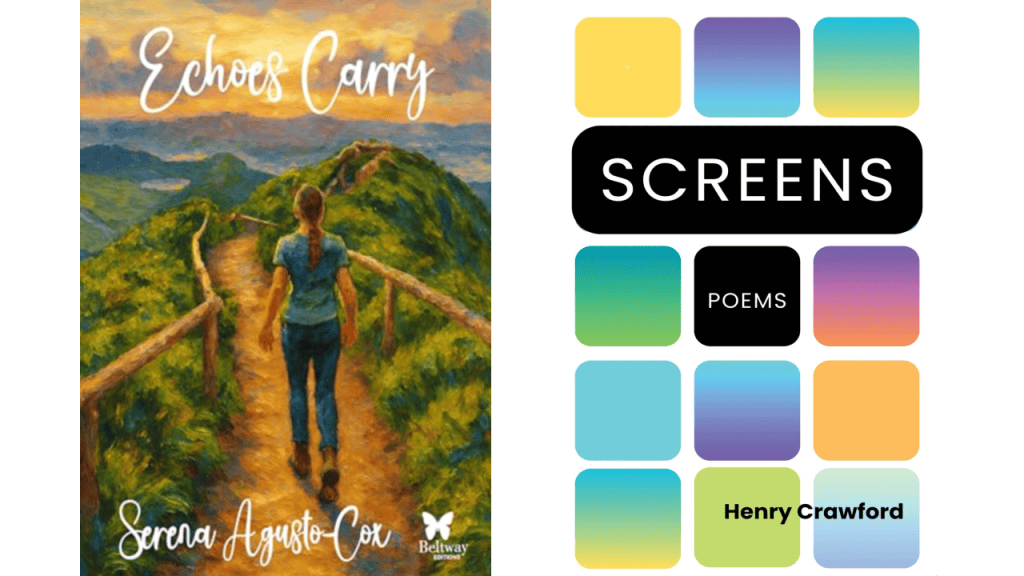
Our warm and welcoming open mic follows the featured authors and we hope you will let us hear from your stories, poems, or other piece. Please prepare no more than five minutes of performance time (about two poems) and sign up when you arrive. Books by the featured authors will be available for purchase:
Below, get to know Serena and Henry!
Who is the person in your life (past or present) that shows up most often in your writing?
Serena: It would be my nana, my maternal grandmother, who appears the most, but family appears in most of my poems.
Henry: My Inner Consciousness.
Where is your favorite place to write?
Serena: I write in many places. But it’s usually not a favorite place. It’s a favorite time. Early hours like 5 a.m. or late hours like 11 p.m. to 1 a.m.
Henry: MLK Library in DC.
Do you have any consistent pre-writing rituals?
Serena: I must have something sweet and coffee.
Henry: No.
Who always gets a first read?
Serena: My first reader is always my college roommate, Anna Horner. We’re still friends and even co-workers. And there is my Never-on-Sundays Poetry Workshop group with W. Luther Jett, Fran Abrams, eve burton, and Marc Drexler.
Henry: I’ll workshop some of my poems but mostly just submit them.
What is a book you’ve read more than twice (and would read again)?
Serena: I’ve surprisingly read many books more than once and would probably read again, but I’ll give you a couple: IT by Stephen King and Field Guide to the End of the World by Jeannine Hall Gailey.
Henry: “The Most Natural Thing” by David Keplinger.
What is the most memorable reading you have attended?
Serena: One of the most memorable readings has to be after I first moved to the area and saw Richard Blanco read at The Writer’s Center from “City of a Hundred Fires.” It reminded me so much of the immigrant stories from my father and how rough it can be to begin again in a new country. It renewed my resolve to make it on my own away from my family.
Henry: The launch of my book, Screens, at The Writer’s Center in 2025. More than $1,000 in proceeds were donated to the charity Save the Children, after the incoming Trump administration froze nearly all funding to foreign assistance programs.
• Serena is a Pushcart Prize nominee, editor at The Mid-Atlantic Review published by DayEight, poetry reviewer with Washington Unbound, and coordinator of poetry programming at the Gaithersburg Book Festival. Her poems appear in multiple magazines and anthologies. She has founded Savvy Verse & Wit and Poetic Book Tours, respectively. Echoes Carry, published by Beltway Editions in April 2026, is her debut poetry collection.
Serena’s author website is https://savvyverseandwit.com and she is also on Substack at https://savvyverseandwit.substack.com.
• Henry is author of three collections of poetry, American Software (CW Books, 2017), Binary Planet (The Word Works, 2020, 2nd ed. 2024), and Screens (Broadstone Books, 2025). His poem, “The Fruits of Famine” won first prize in the 2019 World Food Poetry Competition. His work has been published in Boulevard, Copper Nickel, Rattle, the Southern Humanities Review, and many others. He is a two time finalist for the Wergle Flomp Humor Poetry Contest.
Henry shares his and others’ work and builds a community on Substack at https://everydaypoet.substack.com, and also maintains a personal site: http://henrycrawfordpoetry.com.
The 2026 Ellen Conroy Kennedy Poetry Prize
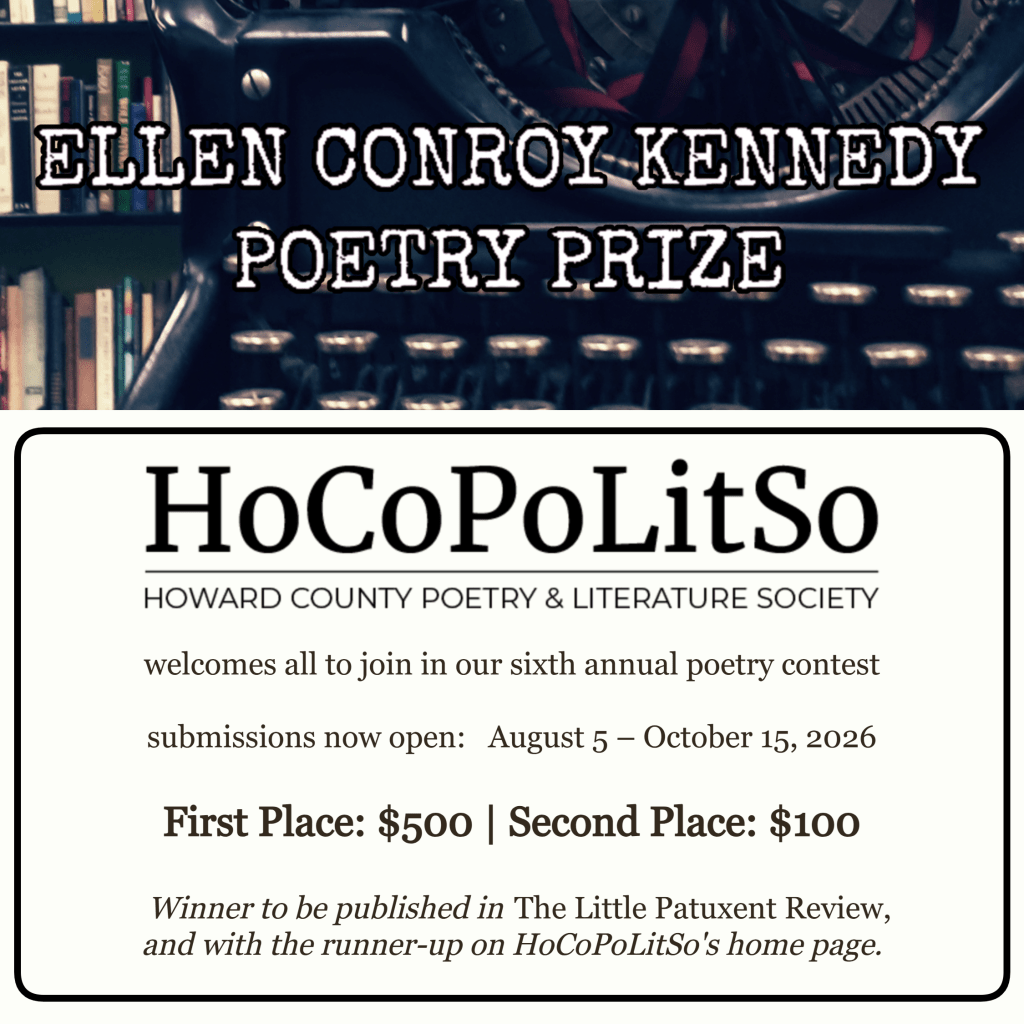
Held annually in loving memory of HoCoPoLitSo’s co-founder, the 2026 Ellen Conroy Kennedy Poetry Prize is now open to all entrants! Whether you are a life-time poet or have never written a line before, we invite you to share with us whatever moves you to poetry.
The author of the poem selected for first place will be awarded a cash prize of $500, celebrated on HoCoPoLitSo’s social media, and in our annual report— and shall have their winning poem published in The Little Patuxent Review and right here on HoCoPoLitSo’s front page.
To enter, click here, or visit the contest’s page to learn more or to read past winners’ poems. A reading fee of $10 is required for adult entrants, to support the administrative costs of the contest and retain a panel of fair and balanced judges.

Wilde Readers of June: Ann Bracken, Linda Joy Burke, & Laura Shovan
For a Special 10th Season Finale
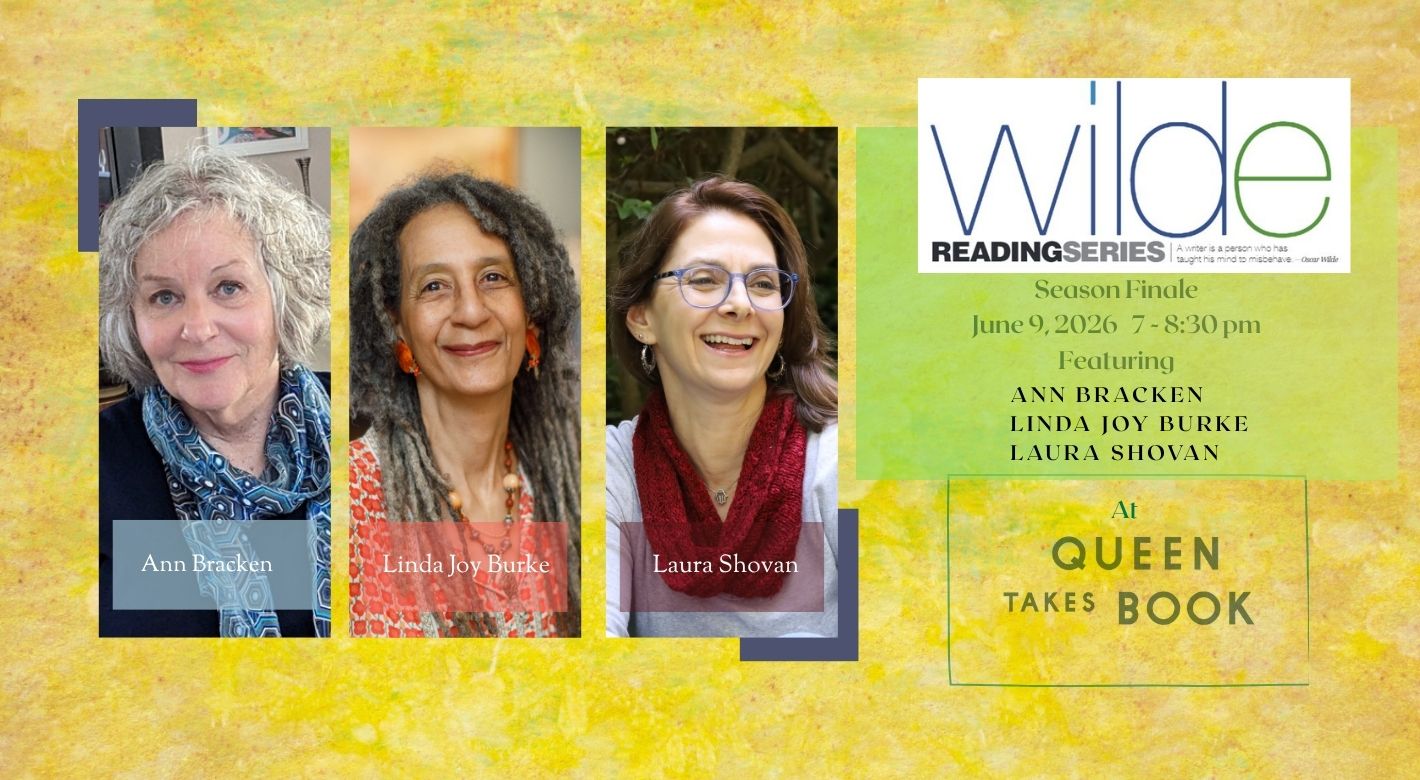
HoCoPoLitSo welcomes all to the June edition of the Wilde Reading Series, now concluding its tenth season of highlighting local writers in Howard County. This month’s reading features the long-time series hosts Ann Bracken, Linda Joy Burke, and Laura Shovan, each themselves a celebrated author in their own right, for a special season finale presentation, with our deepest gratitude to our audiences for enabling this historic milestone. Whether you have attended since the beginning or this would be your first time out, we hope you will join us at independent bookstore Queen Takes Book on Tuesday, June 9th at 7 p.m., at 6955 Oakland Mills Rd, Suite E, Columbia MD, 21045.
Our warm and welcoming open mic follows the featured authors and we hope you will let us hear from your stories, poems, or other piece. Please prepare no more than five minutes of performance time (about two poems) and sign up when you arrive. Books by the featured authors will be available for purchase.
Below, get to know (or hear a little more from) Ann, Linda Joy, and Laura!
Who is the person in your life (past or present) that shows up most often in your writing?
Ann: I don’t know that anyone shows up consistently.
Linda Joy: When I answered this question in 2022 I said “the collective. Of course like most young poets I showed up the most in the beginning, but then as losses occurred both in the body personal and the body politic the collective dominated.” That’s still true these days.
Laura: My younger self shows up in my writing for children and young adults, but also in my poetry for adults. She has a lot of unfinished business and I’m glad to have writing as a place to let her have her say.
Where is your favorite place to write?
Ann: Wherever I am when the muse visits me.
Linda Joy: These days my favorite place is where ever I can stop and either dictate or physically sit down and write. I’ve been dictating a lot of work while sitting with my cat at the top of my staircase.
Laura: I have an office at our house, but I most often write at our dining room table. Our beagle Arthur keeps me company.
Do you have any consistent pre-writing rituals?
Ann: I usually read over what I’ve written before to get me into the headspace to continue previous work.
Linda Joy: If I am purely driven by inspiration, then I am going to get it in where I can. I write what asks to be written, and then take space from that work for a day, a week, a decade … and then edit. The ritual comes in then as I get quiet, detached from outside noise and media. Depending on my mood I may plug into some music that matches the vibe of what I’m working on.
Laura: I’ve tried them all. Candles, getting up early, tea, prayers or incantations, writing at the same time every day. The only thing that works for me is sitting down and getting started.
Who always gets a first read?
Ann: My critique partner, Patricia, is usually the first to see my new work.
Linda Joy: I sometimes share new work with a poetry group I belong to. I also will share with writerly friends and colleagues (depending on topic, genre, intent and our history).
Laura: My first reader depends on the genre I’m working in. For children’s books, my author friends Bridget Hodder, Nancy Krulik, and Casey Lyall. For poetry, it’s often the people in my February Poetry Challenge group.
What is a book you’ve read more than twice (and would read again)?
Ann: I think Steinbeck’s The Grapes of Wrath is one of the finest books ever written. I’ve read it three times.
Linda Joy: I wrote previously about rereading books between library visits during my childhood days. As an adult reader— there are many books that I would read for a second time, through my older, wiser eyes. When I paired down my library many of the books I kept were books I wanted to read again. What comes to mind in the moment are three books: All God’s Children Need Traveling Shoes by Maya Angelou, Malidoma Somé’s Of Water and the Spirit and Elizabeth Heich’s The Initiation.
Laura: If I love a book, I will read the heck out of it, sometimes obsessively. I read Austen’s Pride and Prejudice and Persuasion every year or so. Same with Diana Wynne Jones’s book Howl’s Moving Castle, the source of the Studio Ghibli movie by the same name. When I’m teaching novels-in-verse, I reread Long Way Down (Jason Reynolds), Red White and Whole (Rajani LaRocca), Take a Sad Song (Ona Gritz), and The Poet X (Elizabeth Acevedo).
What is the most memorable reading you have attended?
Ann: About a month ago, I attended a reading with Tim Seibles that was truly inspiring and exceptional, but Grace Cavalieri and Ada Limon are right up there as well.
Linda Joy: The poet Sekou Sundiata was the first I thought of again, his reading here in Columbia during one of the Columbia Festival of the Arts, HoCoPoLitSo-sponsored readings stands out. Another brilliant poet gone too soon.
Laura: I attended the very first Dodge Poetry Festival in 1986, when I was a high school senior. I’d never been to a poetry reading before. I remember that the day began with Galway Kinnell reading in a small church before the sun had burned off the morning mist. Sonia Sanchez was another poet who made an impression on me. At a later Dodge Festival, Taha Muhammad Ali and his translator Peter Cole read his poem “Revenge.” The words pinned me to my chair, then lifted me up. You can watch that moment and listen to the poem here.
• Ann Bracken has published three poetry collections and a memoir. She has served as a contributing editor for Little Patuxent Review and co-facilitates the Wilde Readings Poetry Series in Columbia, Maryland. Her poetry, essays, and interviews have appeared in numerous anthologies and journals, including Awakenings Review, Mad in America, and Gargoyle. Her work has been featured on Best American Poetry, and she’s been a guest on Grace Cavalieri’s The Poet and The Poem radio show.
www.annbrackenauthor.com
• Performance poet, writer, percussionist and picture maker Linda Joy Burke is a 2013 Howard County Women’s Hall of Fame inductee, and 2020 Howie recipient from the Howard County Arts Council for Outstanding Artist. Her work appears in When Divas Laugh, Fledgling Rag, The Little Patuxent Review, Passager, Gargoyle and numerous other print publications and online at Danmurano.com.
@birdpoet on Instagram
https://lindajoyburke.com
http://lindajoyburke.blogspot.com
https://lindajoyburke2.blogspot.com
• Laura Shovan is a Pushcart Prize-nominated poet with over 100 publications in journals and anthologies, both for children and adults. Laura’s award-winning children’s books include The Last Fifth Grade of Emerson Elementary, Takedown, the Sydney Taylor Notable book A Place at the Table, written with Saadia Faruqi, and a poetry collection Welcome to Monsterville. A longtime poet-in-the-schools, Laura teaches at Vermont College of Fine Arts and mentors teens in the Navigating the Margins writing program.
@laurashovan on Instagram
@laura.shovan.2025 on Facebook
www.laurashovan.com
Join Us for a Creative Café With Penelope Tofigh & Girl Scouts of Central MD
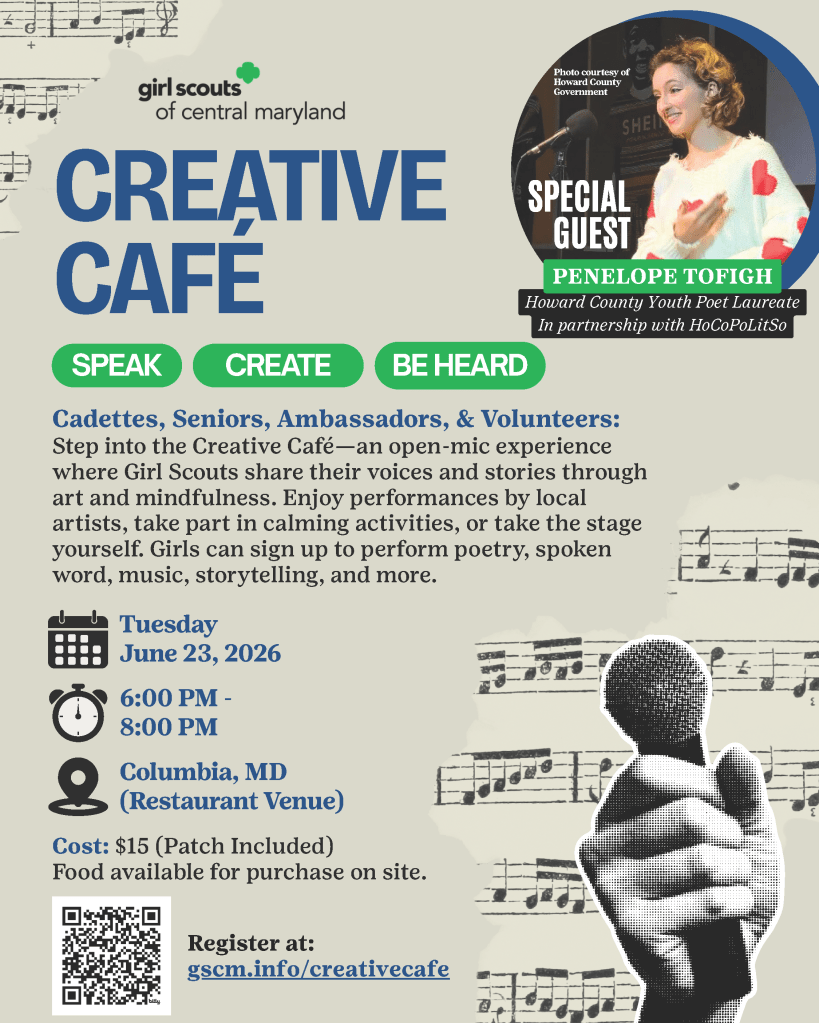
Are you a young writer, or the parent to one? HoCoPoLitSo cordially invites you to join us later this month, Tuesday, June 23rd, from 6–8 p.m. for a special Creative Café, presented in partnership with Girl Scouts of Central Maryland, and activities and open mic readings led by Howard County Youth Poet Laureate Penelope Tofigh.
The program is designed for girls in the 6th–12th grades and their parents or guardians, at an accessible restaurant venue in Columbia, to be later forwarded to attendees out of consideration of GSCM’s privacy policies. Tickets are available for purchase now by clicking here; membership in the Girl Scouts is not required to attend, though the cost of admission includes a literary activities patch for members. Please contact GSCM for questions or accommodations regarding ticketing and attendance.
The Howard County Poet Laureate and Youth Poet Laureate Programs are a partnership of HoCoPoLitSo, Howard County Arts Council, and the Office of the Howard County Executive.
Books in Bloom: 10th Anniversary Edition — May 9, 2026
Celebrating the Next Generation of Readers & Voices
Presented by Howard Hughes Communities and the Downtown Columbia Partnership, this year’s 10th annual Books in Bloom Festival celebrates our rising generation of readers and authors. From captivating book talks by renowned YA authors, to hands-on “CreatorLabs” where you can learn to tell your story your way, the Merriweather District will be buzzing with inspiration. Experience powerful readings and spoken word performances from Howard County students and discover why this festival is a must-attend event for the whole family.
HoCoPoLitSo is proud to sponsor an appearance by Karen Outen, debut author of Dixon, Descending, as she comes to the end of her successful term as this year’s Bauder Writer-in-Residence. Karen will interview Jason Reynolds, author of Coach, on main stage from 11:30 a.m. to 12:15 p.m. Other featured authors include Khadijah Ali-Coleman, Sasa Aakil, Charlene Thomas, Danielle Joseph, Jillian Stacia, student authors of Howard County Public School System, and more. The event is free and open to the public, RSVP requested.
Wilde Readers of May: Vonnie Winslow Crist & Lakita Wilson
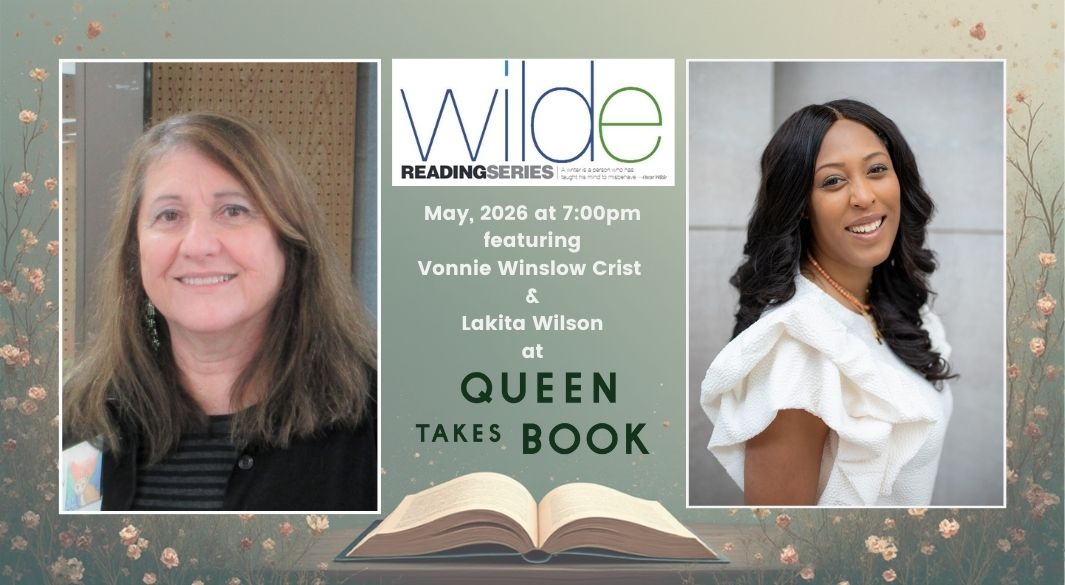
HoCoPoLitSo welcomes all to the May edition of the Wilde Reading Series, proudly continuing its ongoing tenth season of highlighting local authors in Howard County. This month’s reading features Vonnie Winslow Crist and Lakita Wilson, hosted by Ann Bracken. Please join us at independent bookstore Queen Takes Book on Tuesday, May 12th at 7 p.m., at 6955 Oakland Mills Rd, Suite E, Columbia MD, 21045. Please spread the word— bring your friends, family, and students!
Our warm and welcoming open mic follows the featured authors and we hope you will let us hear from your stories, poems, or other piece. Please prepare no more than five minutes of performance time (about two poems) and sign up when you arrive. Books by the featured authors will be available for purchase.
Below, get to know Vonnie and Lakita!
Who is the person in your life (past or present) that shows up most often in your writing?
Vonnie: Me! Often my characters (good and not-so-good) begin with a part of me. Then, I add to that seed. I’ve also used many of my relatives (grandparents, great-aunts, uncles, sisters, etc.) as beginning places for characters. Fair warning, anyone I meet, talk with, or observe is likely to be added to a character.
Lakita: My younger self shows up most in my writing. My deepest fears as a kid, my excitement about reaching new milestones, my nervousness about what was to come in the future. All of these things make it into the spirit of my main characters. The other characters are always a composite of my closest friends and families. Jokes they tell. Conspiracy theories they believe. I thread fragments of my closest loved ones into all of my stories, because they are the people I find most interesting.
Where is your favorite place to write?
Vonnie: In a perfect world, at my computer desk with the basement quiet. In my real world, wherever I can snatch a few minutes to scribble a page or two down. I’ve found I can write almost anywhere — especially if there’s something inspiring nearby.
Lakita: I always write on one specific section of my living room couch. When I first began taking myself seriously as a writer, I purchased a really nice desk, that I still love to look at. But, I never, and I mean, never write there. I always find my way back to my emotional support couch.
Do you have any consistent pre-writing rituals?
Vonnie: Make sure the dog has been out and she has water to drink. Make sure the next meal (lunch or dinner) is basically done so I can write until it’s time to take a break and eat with my husband. And have some tea nearby.
Lakita: I drink one mini can of Pepsi every morning. Please do not tell on me to my doctor. She will not be pleased with this.
Who always gets a first read?
Vonnie: My daughter-in-law, Dawn, is my first reader. She’s an avid reader, offers honest feedback, and loves me enough to be gentle when something needs a major revision.
Lakita: My agent always gets the first read. Most recently, I have started writing in the adult space, and I took a chance and slipped a draft or two to a few trusted friends. But, I am always so nervous about my early drafts that I can’t stomach anyone else viewing how bare-bones and messy it all is before deep revisions.
What is a book you’ve read more than twice (and would read again)?
Vonnie: Lord of the Rings and The Hobbit are favorites which I’ve read several times. I marvel at Tolkien’s worldbuilding skills. Because I’m a mom and granny, I’ve also read several children’s books many times — sometimes, just for the pleasure of the words.
Lakita: Kin by Tayari Jones earned an immediate second read as soon as I reached the last page. It is an absolute masterpiece. I also read Silver Sparrow once a year, because I adore that book. Valley of the Dolls is also my annual guilty pleasure. I love the soapiness of that book! The drama was so good. I can only imagine what it must have been like to read that book when it first released in the 1960s! Scandalous!
What is the most memorable reading you have attended?
Vonnie: Sherman Alexie did a reading years ago which had the audience laughing, shaking their heads, and crying before the end. The presentation, I hesitate to call it just a reading, included personal experiences, inspirations, and other tidbits. He’s also one of my favorite writers.
Lakita: I was in the audience as Elizabeth Acevedo read from her latest novel and gifted us one of her poems. She gave me chills!
• Vonnie Winslow Crist, SFWA, HWA, SCBWI, is author of the Shivers, Scares series, The Enchanted Dagger, Beneath Raven’s Wing, Dragon Rain, Owl Light, The Greener Forest, and other award-winning books. Her writing is included in over 200 publications in Australia, India, Japan, Italy, Spain, Germany, Finland, Canada, the UK, and USA. Believing the world is still filled with mystery, miracles, and magic, she strives to celebrate the power of myth in her fiction and poetry.
Vonnie’s personal website is vonniewinslowcrist.com, and she can be found on Facebook @WriterVonnieWinslowCrist or through her Baker Artist Portfolio.
• Lakita Wilson is the author of several novels and nonfiction projects for children and young adults, including What Is Black Lives Matter? a part of the New York Times bestselling Who HQ Now series, the middle grade novels Be Real, Macy Weaver and Sparkle, and YA romances Last Chance Dance and Pretty Girl County. Lakita’s books have been a part of several state lists as well as recognized by the American Library Association. Lakita received her MFA in writing for children and young adults from Vermont College of Fine Arts. Lakita lives in Prince George’s County, Maryland.
She can be found online at lakitawilson.com and on Instagram as both @LakitaWrites and @LakitaReads.
County Poets Laureate Updates — Reappointment of Truth Thomas, Upcoming Readings, and More
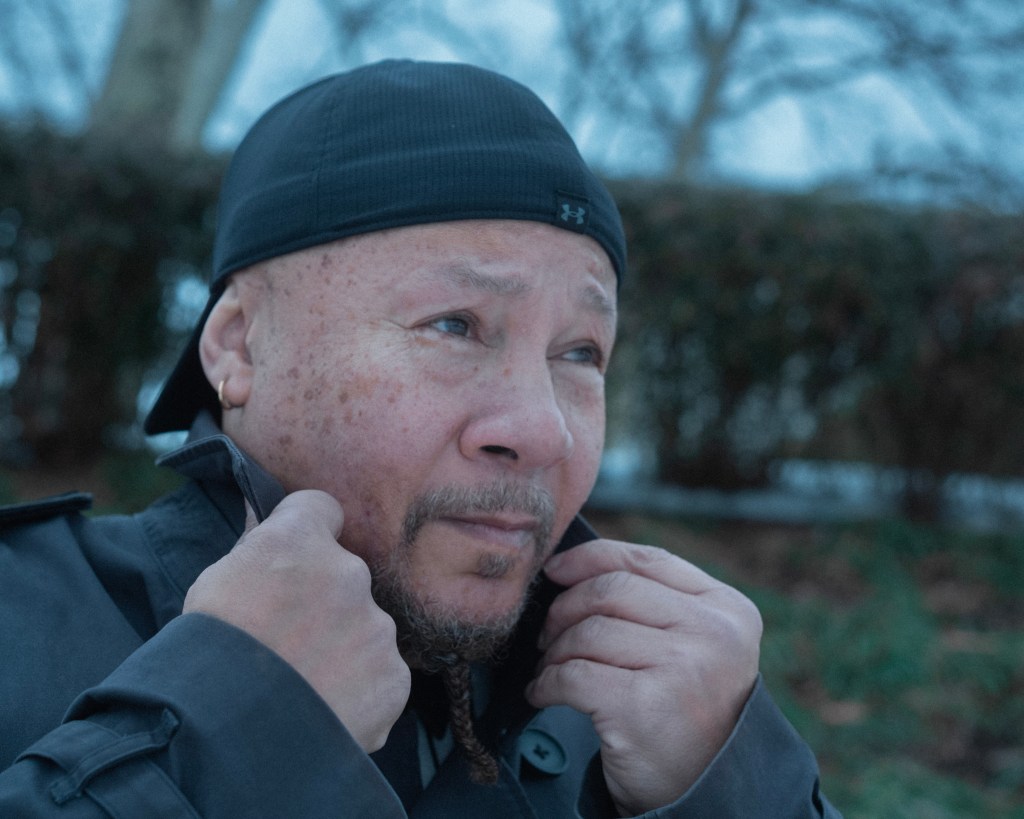
This week, the office of County Executive Calvin Ball announced Truth Thomas’ reappointment for a second term as Howard County’s inaugural poet laureate. Thomas has been serving as the Howard County Poet Laureate since April 2024, on a two-year term previously due to expire in March 2026; Thomas will now serve another two-year term that will end in March 2028. In these past two years, coinciding with HoCoPoLitSo’s 50th anniversary celebrations, we have been deeply honored by the opportunity to come along as Thomas stepped into this new role, elevating and shaping it.
“We are thrilled to celebrate Truth Thomas’s reappointment as Howard County Poet Laureate, a testament to his extraordinary contributions to our literary community,” said Ryna May, EdD, Co-Chair, HoCoPoLitSo. “The Poet Laureate serves as a vital cultural ambassador, bringing the transformative power of poetry to diverse audiences, fostering creative expression, and giving voice to the experiences that unite us as a community. HoCoPoLitSo is honored to continue our partnership with the Howard County Executive and the Howard County Arts Council in championing the Poet Laureate program and ensuring that poetry remains a vibrant and essential part of the arts in Howard County.”
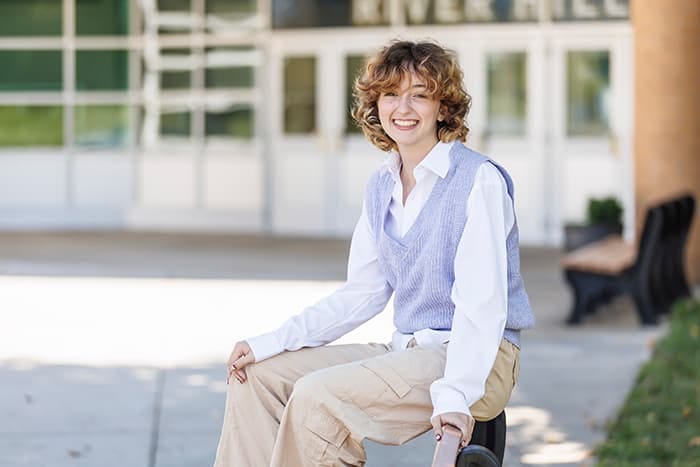
HoCoPoLitSo recently presented a short interview with current Howard County Youth Poet Laureate, Penelope Tofigh, in the latest issue of our quarterly newsletter, Rhyme & Reason. Penelope, a Junior at River Hill High School who was also the 2025 County and Maryland state winner of Poetry Out Loud, just can’t seem to get enough of poetry, and as we head into National Poetry Month, we hope you can join us for some of the many upcoming events in the second half of her term, which this month alone includes:
- Friday, April 10: The Authors Next Door at Residences at Vantage Point
- Sunday, April 12: A Poetry Tea at Elkridge Furnace Inn
- Thursday, April 23: Blackbird Poetry Festival at Howard Community College
Meanwhile, as a reminder, applications are open NOW for the next one-year term of Howard County Poet Laureate, for eligible applicants aged 14–21 and who either reside in or will be able to present at in-person events in Howard County. The next Youth Poet Laureate will serve from September 2026 until August 2027, and receives an honorarium of $500.
Eligible candidates may apply now by clicking HERE! The deadline for self-submitted applications is April 30, 2026. Full program guidelines can be found on the Howard County Arts Council grants homepage; for questions on the application process, please contact grantsandprojects@hocoarts.org, or by phone call to (410) 313-2787 during regular business hours.
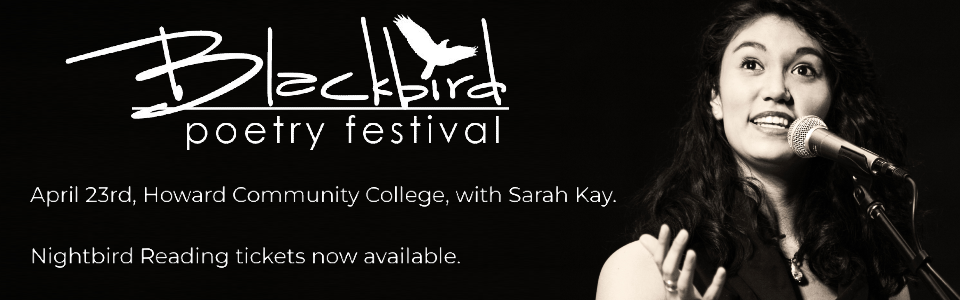
Last but certainly not least, both County Poets Laureate will present at this year’s Blackbird Poetry Festival, to be held Thursday, April 23rd, again in partnership with and on the campus of Howard Community College. Truth Thomas will host a morning poetry writing workshop, centered on his original, “Skinny” poetry form; and Penelope Tofigh will read alongside the Festival headliner, Sarah Kay, at the afternoon Sunbird Reading and evening Nightbird Reading. The day-long event is open to the public, with attendance to daytime events free of charge, and admission to Nightbird available for purchase now, while seating lasts.
HoCoPoLitSo is a 501(c)(3) nonprofit organization (FEIN 52-1146948) registered in the state of Maryland, donations to which are tax-deductible to the fullest extent allowed by law. A copy of our current financial statement is available upon request. Documents and information submitted to the State of Maryland under the Maryland Charitable Solicitations Act are available from the Office of the Secretary of State for the cost of fees and postage.
HoCoPoLitSo is supported in part by funds gratefully received from the Maryland State and Howard County Arts Councils; Howard County Government; Community Foundation of Howard County; Dr. Lillian Bauder; and from numerous other, generous individual and corporate contributors. Event proceeds support the live and recorded literary programs offered by HoCoPoLitSo for student and general audiences. The artistic contents and opinions expressed at HoCoPoLitSo events do not necessarily reflect the views or policies of HoCoPoLitSo’s grantors, donors, or individual Board or staff members.
The Bauder Lecture Series and Blackbird Poetry Festival are partnerships of HoCoPoLitSo and Howard Community College. The Howard County Poet Laureate and Youth Poet Laureate Programs are a partnership of HoCoPoLitSo, Howard County Arts Council, and the Office of the Howard County Executive.

